
Key Takeaways
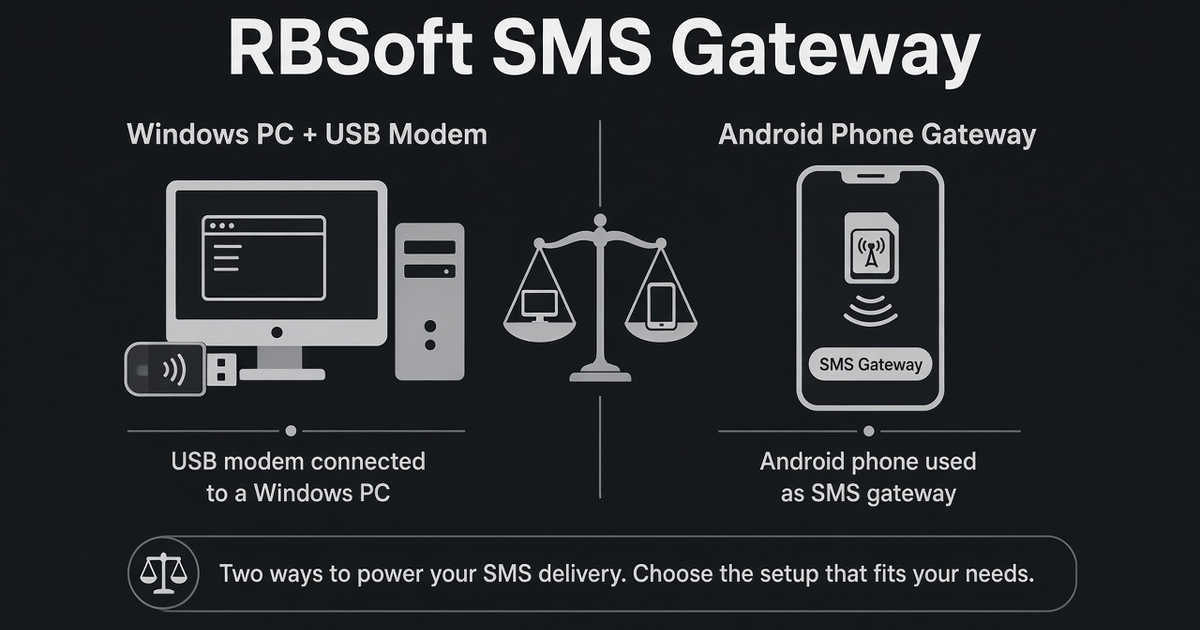
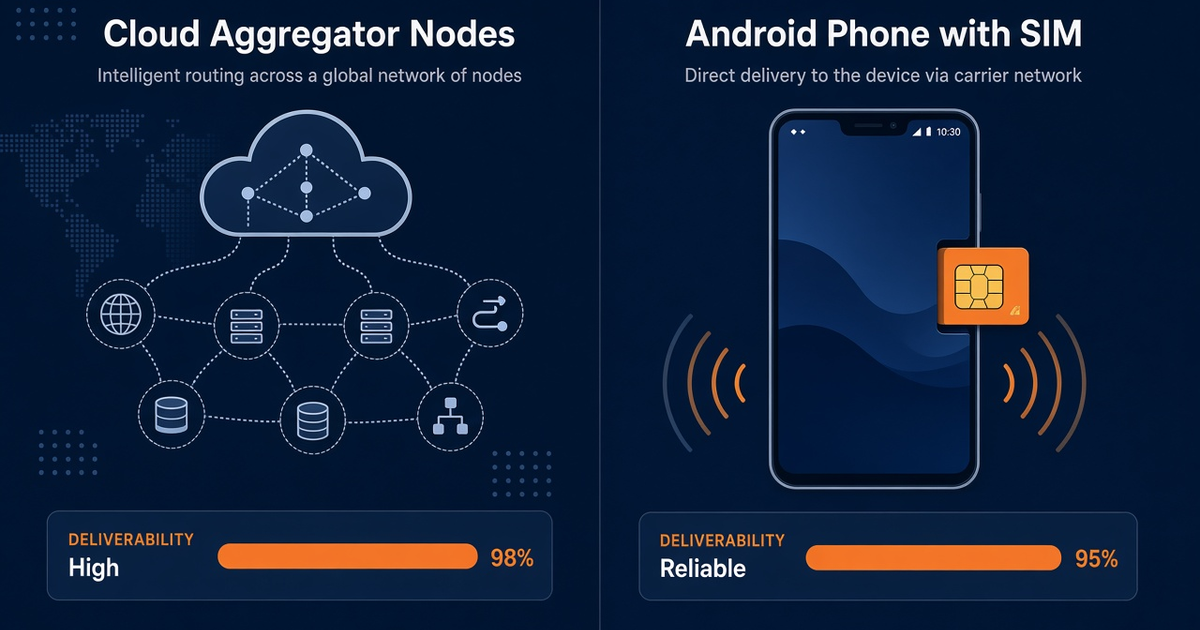
- Ozeki Android SMPP vs Android SMS gateway deliverability: modem/SMPP stacks and handset gateways both need terminal status — accept is not delivered.
- Link competitor hubs; do not rewrite full overviews here.
- Handset path: offline phones, OEM killers, missing carrier DLR, empty prepaid.
- Be fair: dedicated SMPP/modems can win when you already run that ops model.
- You bring the phone and operator airtime on our path. We meter devices and send volume.
SMPP rack vs handset DLR
Ozeki Android SMPP vs Android SMS gateway deliverability: how each path reports success when SMS actually reaches a handset. Competitor hub patterns: when to switch. Our DLR: Android delivery reports. Product: Android SMS gateway.
A submitted PDU and a delivered handset are different sentences — write dashboards that know the difference.
Deliverability surfaces
| Concern | SMPP / modem-class path | Android SIM gateway (us) |
|---|---|---|
| Accept | SMPP submit_sm / app accept | HTTPS accept + message id |
| Terminal state | SMSC DLR / modem reports | Carrier DLR when device provides it |
| Ops ownership | Windows/service + modem hardware | Phone power, OEM, airtime |
| False green | Service up, SIM dead | Wi-Fi heartbeat, SMS failing |
Android SIM failure modes
Segment by ICCID. Isolate OTP — OTP verification. Live fields: Developer Center.
When Ozeki-class wins
Teams already staffed for SMPP, Windows services, and modem racks may keep that stack. Handset SaaS wins when you want MSISDN identity with less modem plumbing — if you accept phone ops.
Cost
Our path: devices + send volume + your operator airtime. Modem stacks: licenses/hardware + airtime. Free: 1 device / 300 SMS lifetime. Starter, Professional, and Business list Unlimited SMS as platform send volume; that is not unmetered carrier SMS.
Checklist
- Terminal status defined on both paths.
- Airtime alerts independent of “service up.”
- OTP isolated from promo.
- Fair when-to-switch notes written.
- No invented competitor SLAs.
Next steps
pricing, comparisons, measure deliverability.
Related product pages
Jump to the live product docs for this topic—not another long-form article.
- device and SMS volume pricingPlans and allowances
- Twilio vs Android SMS gatewayCloud vs own-SIM cost model
- Android SMS gateway product guideDefinition, product, and how to buy
- SMS API documentationLive endpoint reference