Key Takeaways
- Multi-device means more Android handsets paired to one account, each with its own SIM, charger, and OEM exemptions.
- Dual SIM in one chassis is two slots, one battery, one OEM killer. It is not a spare device.
- Plan caps are 1 / 2 / 5 / 15 devices (Developer 1). Platform send volume is a separate meter.
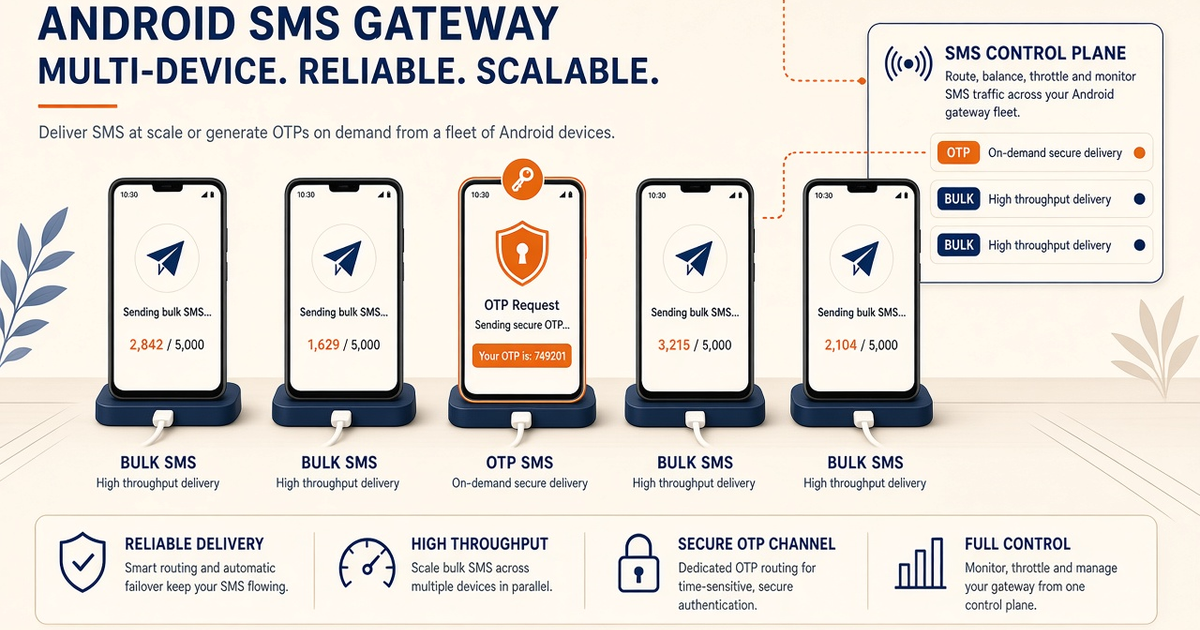
- Pin OTP, reminders, and promo to deviceIds. A shared queue is how a CSV starves login.
- Priced by devices and SMS send volume. You use your own phone and operator SMS credit. Every extra radio is still your airtime.
What multi-device actually is
Feature page: multi-device and dual SIM. Several Androids, several SIMs, one control plane. Throughput is still GSM plus OEM plus operator fair-use — not a slogan about unlimited send. Hub: how an Android SMS gateway works.
A second phone you did not charge is not capacity. It is a prop.
Not the same as dual SIM
Dual SIM helps when you want on-net to two operators from one chassis. It does not give you two batteries, two pairing sessions, or two OEM exception lists. When the phone sleeps, both slots sleep. For OTP failover you want another handset, already paired, already exempted.
Plan caps and lane design
| Plan | Device cap | Sensible split |
|---|---|---|
| Free | 1 | Canary only (300 SMS lifetime) |
| Developer | 1 | One auth radio; no promo on it |
| Starter | 2 | OTP + reminders, or OTP + spare |
| Professional | 5 | Auth, reminders, promo, geo, spare |
| Business | 15 | Sites × lanes, still pin deviceIds |
deviceIds, not hope
Live field names live in Developer Center and SMS API documentation. There is no packaged SDK. If you omit a pin, a promo worker can steal the auth radio. Webhooks and DLR should be sliced per device so on-call sees which phone died: webhooks, delivery reports.
Stand up a fleet
- Name lanes before you buy phones. Auth, reminders, promo. One spare. Map those to plan caps.
- Pair each handset properly. Charger, Wi-Fi, OEM exemptions, nickname. Same setup ritual on every unit.
- Pin sends with deviceIds. OTP never “any online device.” Confirm the live parameter in Developer Center.
- Health check the fleet daily. Pairing light, battery, queue depth, DLR anomalies per device — not a single green dashboard lie.
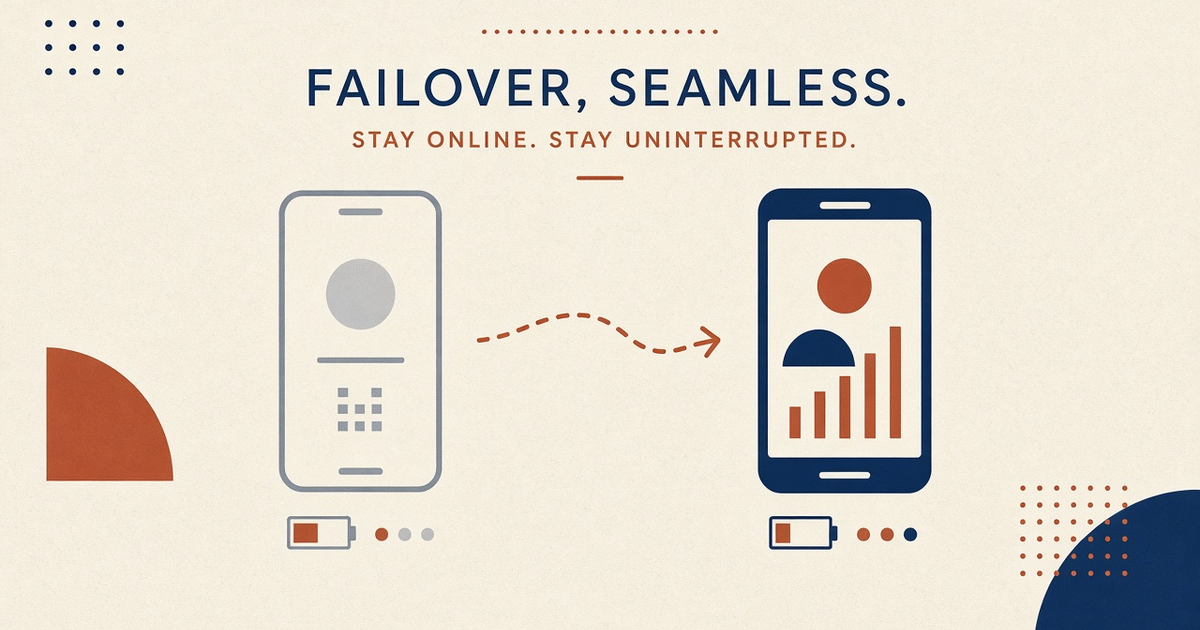
- Failover is a second charged phone. Re-point deviceIds. Dual SIM will not save you from a dead battery.
- Canary after every OEM update. One phone updated is one radio at risk. Do not update the whole fleet on Friday.
Pairing ritual: device setup. App: download the Android gateway app. Related API spoke: API multi-device in-depth.
Failure modes
- One OEM update bricks pairing on the “spare” you never tested.
- Slot map after reboot sends OTP out the promo SIM.
- All five phones on one USB hub that brown-outs at 03:00.
- Shared Google account / work profile kills the gateway app on three units at once.
TCO
Service pricing is based on device count and total SMS sent through the gateway. You need a working Android phone with a SIM and SMS credit from your mobile operator. Operator message costs are yours—we do not sell carrier SMS balance. Starter from $19/month for 2 devices. Handsets, chargers, SIMs, and staff watching pairing lights are the rest of TCO. Device and SMS volume pricing.
Next steps
Name lanes, buy chargers first, pin deviceIds, keep a spare that has actually sent a canary this week.
Related product pages
Jump to the live product docs for this topic—not another long-form article.
- multi-device and dual SIM routingCapacity and failover
- device and SMS volume pricingPlans and allowances
- Android SMS gateway product guideDefinition, product, and how to buy
- SMS API documentationLive endpoint reference