
Key Takeaways
- Device offline alerts exist because a paired phone can look fine in memory and still be unreachable.
- Alert on heartbeat loss, not on a single missed DLR.
- Distinguish Wi-Fi death, Doze, empty prepaid, and a yanked SIM — they page different owners.
- OTP needs a second device already paired, not a Slack thread that says “someone plug it in.”
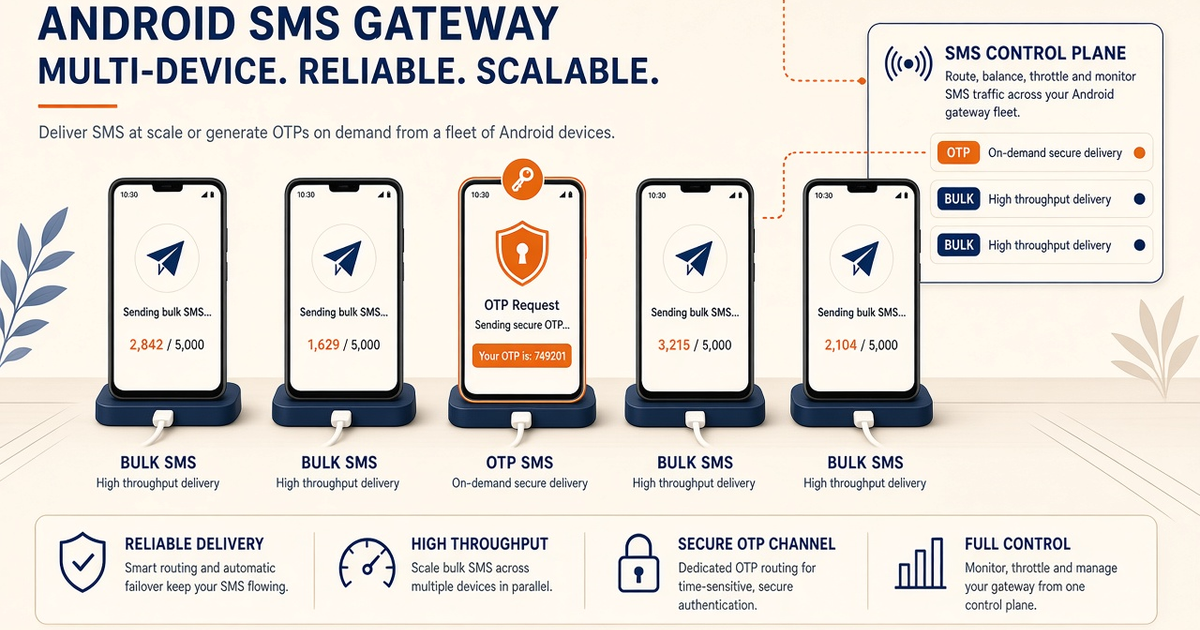
- Multi-device plans exist so one offline handset is not the whole queue.
- You still pay operator airtime and a device slot whether or not the phone is awake.
Offline is a radio event
Android SMS gateway device offline alerts are how you find out the shelf phone died before your users do. The control plane can still hold queued jobs. The SIM cannot send them. If your only signal is “customers complain codes never arrived,” you do not have monitoring. You have a suggestion box.
SMS Gateway prices connected devices and platform SMS volume. You bring the Android and operator credit. Health in the panel covers online status, battery, connectivity, and SIM state — use it. Free is one device and 300 SMS lifetime. Failover is a multi-device plan problem, not a hope.
“A heartbeat is cheaper than a war room. Page when the phone stops talking, not when the CEO’s login fails.”
What “offline” should mean
Define it in writing:
- No heartbeat for N minutes (pick 3–5 for OTP, 10–15 for bulk).
- App process gone after reboot (OEM autostart failed).
- Wi-Fi associated but control plane unreachable (captive portal, DNS).
- SIM absent or barred — device may still “ping” over Wi-Fi.
That last case fools people: the phone is on the internet and the SIM cannot send. Pair offline alerts with a periodic canary SMS, or you will green-board a brick with great Wi-Fi. See measure deliverability.
Alert matrix
| Signal | Severity for OTP | First owner | Do not |
|---|---|---|---|
| Heartbeat stale | Page | On-call ops | Wait for a user ticket |
| Canary SMS fail, heartbeat OK | Page | SIM/airtime owner | Restart webhooks first |
| Battery < 20% on charger | Ticket / business hours | Facilities / who owns the cable | Ignore “it is plugged in” |
| Single pending DLR | Ignore | — | Wake people at 2 a.m. |
| All devices in a pool stale | Incident | On-call + fallback to CPaaS if you have one | Keep retrying OTP into the void |
Wire whatever the product exposes into the pager you already run (email on Business plans includes phone support as listed — that is not your 24/7 NOC). Confirm current health fields in the Developer Center.
Causes ranked by how often they bite
- OEM battery optimization after an OS update — battery optimization guide.
- Someone unplugged the charger to use the outlet.
- Guest Wi-Fi idle timeout or a router reboot.
- Empty prepaid; device still on Wi-Fi.
- SIM seated poorly after cleaning, or an operator bar.
Physical access matters. A gateway in an unlocked kitchen is a theft-and-offline problem. Setup assumes the phone stays where you left it.
Who gets paged
Name two humans: radio owner (phone, SIM, charger) and app owner (API keys, retry storms). Mixing them produces “I restarted nginx” while the SIM sits in a drawer. Put the device nickname in the alert so nobody SSH’es the wrong rack.
Failover that actually fires
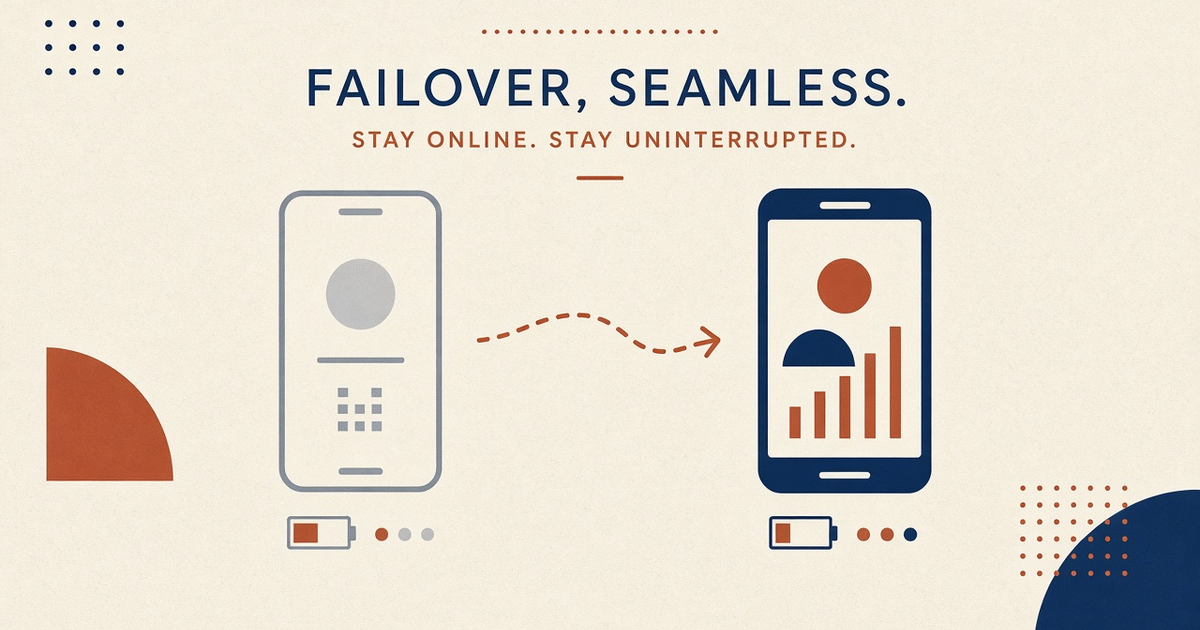
Remaining devices keep the queue moving only if they are already paired, exempted from Doze, and funded. Starter allows 2 devices — that is the minimum OTP shape. Professional 5 / Business 15 are how you isolate lanes. Multi-device is not a spare in a box that was never powered on.
Dual SIM on one dead phone is not failover. Dual SIM is two operators, one battery.
Cost of a quiet phone
Platform volume does not roll over like a prepaid pack we sold you. Operator airtime is not refunded because the charger fell out. Incidents burn retries. Keep the spare on the same plan family so failover does not also mean a surprise voucher hunt. Pricing: devices and SMS volume.
Decision guide
Go live when heartbeat alerts page a human who can walk to the phone, and a second device is already sending canaries. Delay if “we will notice in the dashboard tomorrow.” If no one can own hardware, pick a CPaaS for that lane.
Checklist
- Heartbeat threshold written per lane (OTP vs bulk).
- Canary beside heartbeat.
- Named radio owner and app owner.
- Spare paired, charged, Doze-exempt.
- Charger physically captured (tape is an engineering control).
- OS-update re-check on the calendar.
Next steps
Combine with battery optimization, DLR, and webhooks. Architecture overview: complete guide.
Related product pages
Jump to the live product docs for this topic—not another long-form article.
- device and SMS volume pricingPlans and allowances
- transactional SMS for orders and alertsEvent-driven messages
- Android SMS gateway product guideDefinition, product, and how to buy
- SMS API documentationLive endpoint reference