Key Takeaways
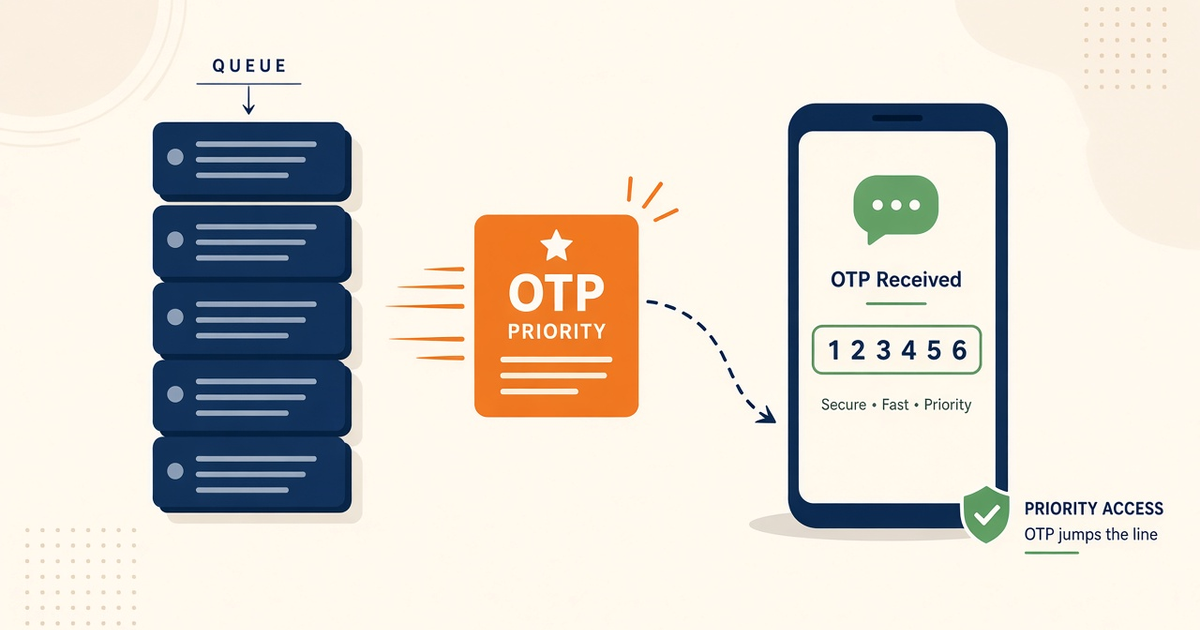
- Scenario 900 is a multi-location booking brand: one OTP radio for the shared portal, reminder queues per shop.
- Shop CRMs must not POST campaigns onto the login device. That is how 08:00 opens starve codes in every city.
- Reminders may share a second pool. OTP does not rotate through shop phones.
- Raise OEM ceilings carefully; carrier fair-use still applies. No “Unlimited SMS” titles.
- Priced by devices and SMS send volume. You use your own phone and operator SMS credit. Free: 1 device / 300 SMS lifetime / 300 contacts. Developer: 25,000 SMS per year.
Android SMS gateway scenario 900 is a salon or clinic group with one booking login and three (or thirty) chairs. Priority is organizational: the brand OTP spine always wins. Site reminder CSVs wait on other radios. The anti-pattern is every manager pointing Mailchimp-for-SMS at the same Android.
Priced by devices and SMS send volume. You use your own phone and operator SMS credit. Developer Center. GSMA.
One OTP spine, many shops
Customers log into one brand app. Codes must look and feel the same and must not wait behind a downtown reminder dump. Site names belong on reminder templates, not on the OTP body.
If Shop B’s win-back CSV can enqueue on the login phone, Shop A’s 08:01 codes will miss — and you will debug it as “the app is down.”
Brand login vs site reminders
| Lane | Owner | Device | Who can POST |
|---|---|---|---|
| Portal OTP | Platform | Spine Android(s) | Auth service only |
| Same-day reminder | Shop | Site pool | That shop’s PMS |
| Win-back / promo | Shop / HQ marketing | Promo MSISDN | Consented lists + STOP |
Who may POST to the OTP radio
API keys per environment and per producer. Shop PMS keys cannot target the OTP device id. Idempotency: login attempt id on the spine; appointment id on site reminders.
REST — PHP, C#. Not SDKs. MCP wraps REST.
Site reminders can wait
Skip reminders once the slot started. Concatenated Unicode turns “short” copy into two parts — count that before a city-wide 08:00 fanout. Parts and retries.
Fair-use across locations
You can raise OEM/Android rate ceilings on the spine. Carrier fair-use still applies. Do not advertise unlimited carrier SMS. OEM.
Device math for three shops
Priced by devices and SMS send volume. You use your own phone and operator SMS credit. One spine + three reminder phones is four devices — over Starter (2), inside Professional (5) if you keep promo off-SIM. Free is 300 lifetime on 1 device. Developer: 25,000 SMS per year. Pricing.
Opening-hour collision
All shops open at once. Stagger reminder minutes. Canary spine OTP at 07:30. Spare charged spine phone. Setup · STOP on promo.
Franchise keys
A departed shop manager must not keep a key that can hit the spine. Rotate. Do not log full OTP. Not a CodeCanyon franchise pack.
Per-site CPaaS
If a franchisee refuses device ops, their reminder lane can be CPaaS while OTP stays on your Androids. vs aggregator.
Checklist
- Shop keys cannot select OTP device id.
- Reminder stagger across sites.
- Spine spare paired and canaried.
- Promo off the login radio.
- Device count vs plan cap checked.
- Airtime owner per SIM.
Next steps
From a shop PMS key, prove OTP device id is rejected; send a reminder on the site pool. API · Docs.
Related product pages
Jump to the live product docs for this topic—not another long-form article.
- OTP and 2FA SMS on AndroidAuthentication flows
- multi-device and dual SIM routingCapacity and failover
- SMS delivery reports (DLR)Delivery status tracking
- SMS API documentationLive endpoint reference