Key Takeaways
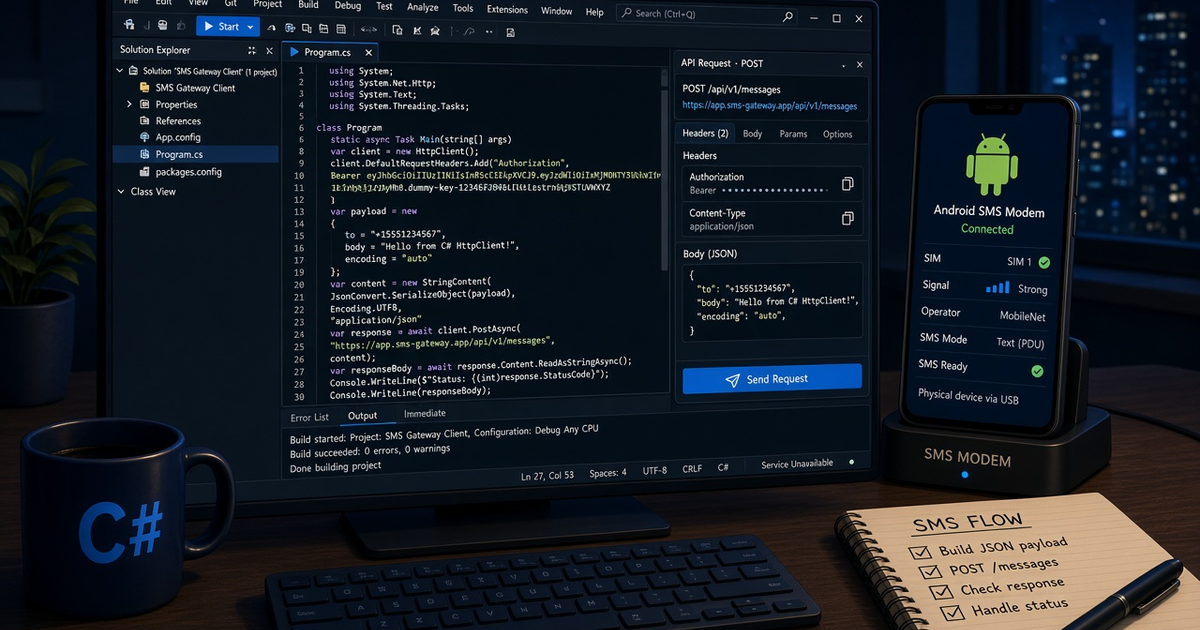
- c android sms gateway api send sms is Bearer POST /api/v1/messages from server-side HttpClient — not a NuGet “Complete C# SDK”.
- HTTP 2xx means the control plane accepted the job. DLR or webhooks close delivery.
- Put the key in configuration or Key Vault. Never a MAUI or WinForms client.
- Idempotency-Key on the business event so Polly retries do not double-send OTP.
- Priced by devices and SMS send volume. You use your own phone and operator SMS credit. A 200 still spends operator credit once the radio fires.
- Docs win over this sample if they disagree.
HttpClient, not a C# SDK product
Search intent for android sms gateway api send sms in C# is a server worker that posts JSON, not a branded NuGet. Service pricing is based on device count and total SMS sent through the gateway. Confirm the live contract at docs.sms-gateway.app.
If the only status you store is HttpStatusCode.OK, you are logging the control plane, not the radio.
using System;
using System.Net.Http;
using System.Net.Http.Headers;
using System.Text;
using System.Threading.Tasks;

public static class SmsGatewaySend
{
    // Documented send endpoint — POST /api/v1/messages (Bearer JSON)
    private const string SendUrl = "https://app.sms-gateway.app/api/v1/messages";

    public static async Task SendAsync(string apiKey, string number, string message)
    {
        using var client = new HttpClient();
        client.DefaultRequestHeaders.Authorization = new AuthenticationHeaderValue("Bearer", apiKey);
        client.DefaultRequestHeaders.TryAddWithoutValidation("Idempotency-Key", Guid.NewGuid().ToString());

        var json = "{\"to\":[\"" + number + "\"],\"text\":\"" + message + "\",\"type\":\"sms\"}";
        using var content = new StringContent(json, Encoding.UTF8, "application/json");
        var response = await client.PostAsync(SendUrl, content);
        var body = await response.Content.ReadAsStringAsync();
        Console.WriteLine((int)response.StatusCode + " " + body);
    }
}
That is copyable REST. It is not “Download C# SDK.” C# samples. Microsoft’s own guidance is typed clients and timeouts (HttpClient guidelines).
POST /messages
to[], text, optional type, optional deviceIds. Do not invent a priority field. Pillar: Android SMS Gateway API.
| Layer | Do this | Not this |
|---|---|---|
| Transport | HttpClient + Bearer + JSON | NuGet “SMS SDK” wrapping undocumented hosts |
| Retries | Polly with Idempotency-Key = auth event id | Fire-and-forget Task.Run that duplicates OTP |
| Status | Webhook handler or GET /messages/{id} | Treat PostAsync 200 as Delivered |
| Radio | deviceIds for OTP; pause if last-seen is stale | More app servers instead of a second phone |
Accepted is not delivered
Persist the message id from the 202 body. GET DLR or handle signed webhooks — SMS webhook integration. Delivery reports.
Secrets and timeouts
User secrets / Key Vault. API keys in env. HttpClient timeout is not operator DLR latency. Back off on 429 with jitter.
OTP vs bulk from the same process
Separate queues even if both call the same host. Pin OTP. OTP verification. Priced by devices and SMS send volume. You use your own phone and operator SMS credit.
Send checklist
- Key off-source; typed HttpClient.
- Idempotency-Key = business event.
- Message id stored; webhook or poll wired.
- Staff canary on a real handset — not only unit tests.
- OTP device idle if you are blasting notifications.
Next steps
Send one staff OTP, wait for DLR, then production. Pricing. Setup.
Related product pages
Jump to the live product docs for this topic—not another long-form article.
- SMS API documentationLive endpoint reference
- C# REST send samplesC# code examples
- device and SMS volume pricingPlans and allowances
- Android SMS gateway product guideDefinition, product, and how to buy