Key Takeaways
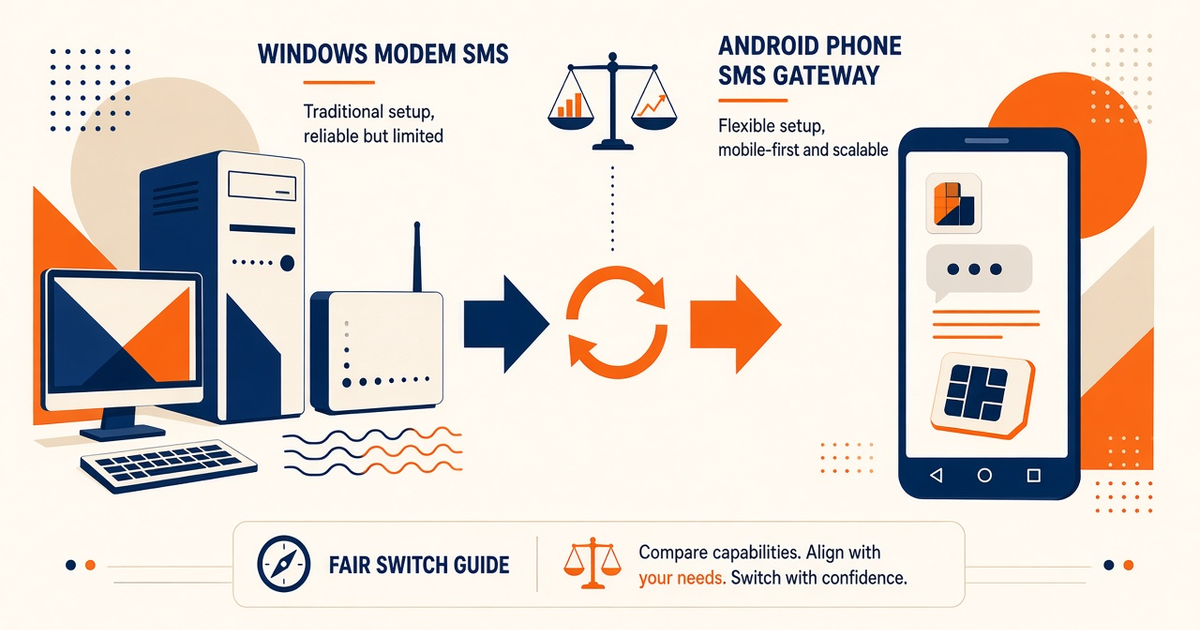
- RBSoft-class products are typically Windows PC + modem/SMPP style gateways you operate on premises; sms-gateway.app is an Android phone SIM path with a cloud control plane.
- Switch when you want HTTPS JSON from app servers, QR-paired handsets, and device/volume SaaS metering — not when you need a full Windows modem farm you already staff.
- Both paths usually still need SIMs and operator airtime; neither invents free carrier SMS.
- Be fair: keep Windows/SMPP if that ops model already works and regulators expect it.
- You need a working Android phone with a SIM and SMS credit from your mobile operator. Operator message costs are yours—we do not sell carrier SMS balance. Service pricing is based on device count and total SMS sent through the gateway. Free includes 300 SMS lifetime to trial our path.
Search intent rbsoft sms gateway vs android sms gateway when to switch is about timing a stack change — not declaring a universal winner. Cornerstone: RBSoft SMS Gateway alternatives. Product: Android SMS gateway. Broader comparisons: comparisons.
You need a working Android phone with a SIM and SMS credit from your mobile operator. Operator message costs are yours—we do not sell carrier SMS balance. Service pricing is based on device count and total SMS sent through the gateway. Pricing. Do not frame the switch as Unlimited SMS.
What “when to switch” means
You switch when ops cost, developer experience, or hardware risk dominates — not because a blog ranked higher. Model TCO: licenses, PCs, modems, SIMs, airtime, and staff hours against devices + volume SaaS plus handset ops.
Switch when HTTPS JSON and phone pairing beat Windows modem babysitting for your team — not because Android magically removes carrier bills.
Windows modem stack vs Android SIM API
RBSoft-style deployments often center on a Windows host, modem pools, and classic SMSC protocols. Our path: official Android app, QR pairing, REST POST /api/v1/messages, DLR/webhooks. Spec: SMS API documentation.
Switch signals
| Signal | Lean switch to Android SaaS | Stay on Windows/modem |
|---|---|---|
| Developer surface | Need Bearer HTTPS from Linux/containers | Existing SMPP/COM tooling is stable |
| Hardware | Want commodity Android phones | Already invested in modem racks |
| Ops staff | App/server team, light handset ops | Windows admins on call for modems |
| Global long-tail | Domestic SIM economics matter | Or you already hybrid with CPaaS |
| Uptime model | Spare charged phones ready | Redundant modem ports already proven |
When RBSoft-style still wins
Keep it if regulators, partners, or internal standards assume Windows gateway software, or if your modem farm already meets OTP SLAs. Switching for fashion burns airtime and focus.
When Android SaaS wins
Move when you want cloud pairing, multi-device routing in a dashboard, and language-agnostic REST from Nest, Rails, or workers — with SIMs you already buy. Setup: device setup.
Migration notes
Put a facade in front of sends, canary staff MSISDNs on Android while Windows still serves production, then cut over with DLR checks. Isolate OTP from bulk on both stacks.
Next steps
Related: Twilio when to switch, Ozeki vs Android.
Related product pages
Jump to the live product docs for this topic—not another long-form article.
- device and SMS volume pricingPlans and allowances
- Twilio vs Android SMS gatewayCloud vs own-SIM cost model
- Android SMS gateway product guideDefinition, product, and how to buy
- SMS API documentationLive endpoint reference